top of page

"Embracing Tomorrow Today: Elevating Patient Care and Physician Empowerment leveraging AI"
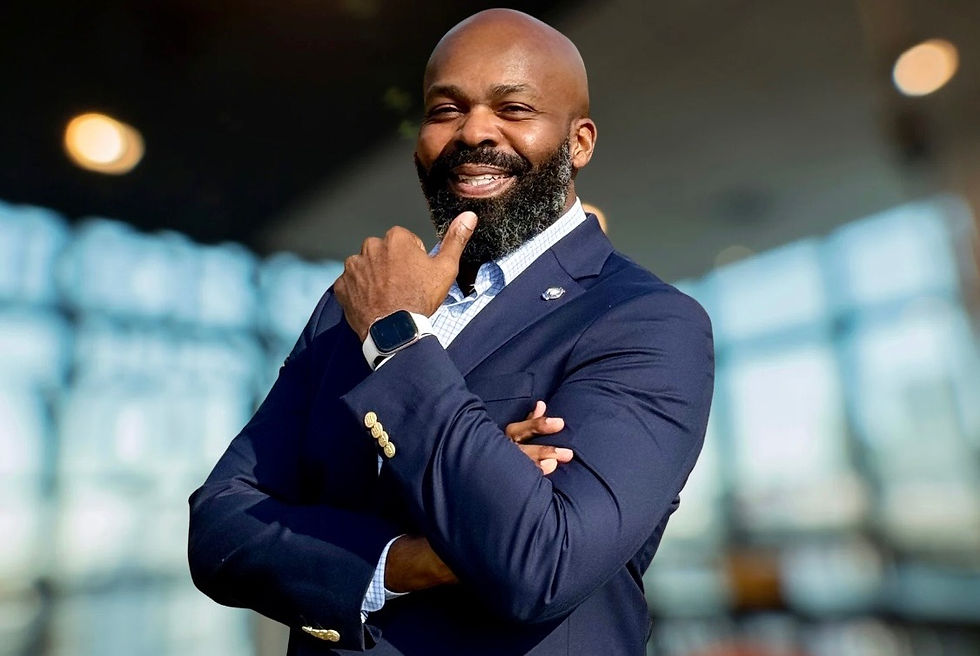


We are thrilled to share that Dr. Rich Greenhill has been invited to headline the HCA Houston Healthcare Northwest Annual Medical Staff Meeting on December 2, 2025, in The Woodlands, Texas. Dr. Greenhill will address a pressing challenge: how artificial intelligence can simultaneously enhance patient care while combating the epidemic of physician burnout.


Why This Topic Matters Now


The healthcare landscape in 2025 faces unprecedented challenges. Physician burnout has reached historic levels, with over half of U.S. physicians reporting emotional exhaustion. At the same time, AI technologies have matured from experimental concepts to proven solutions that are reshaping clinical workflows across the nation's leading health systems.

Dr. Greenhill's presentation comes at a pivotal moment when the medical community must make critical decisions about embracing AI—not as a replacement for human expertise, but as a powerful tool to restore the joy of practicing medicine and enhance patient care.


A Critical Conversation for Healthcare & Physician Leaders

The question is no longer whether AI will transform healthcare, but how physicians and healthcare organizations can harness these technologies strategically and effectively. Dr. Greenhill will explore how AI is addressing some of the most pressing challenges facing modern medicine, including:

  • Administrative burden and documentation overload that consumes more than half of physicians' workdays

  • Emerging AI technologies that are fundamentally changing how physicians access medical knowledge and coordinate care

  • The physician-patient relationship and how technology can help restore meaningful human connection in clinical practice


What Attendees Will Gain


This presentation will provide healthcare leaders and physicians with insights into the current state of AI in healthcare and practical perspectives on navigating this transformation. Dr. Greenhill will challenge attendees to think critically about AI adoption while sharing a vision for how these tools can serve physicians and patients alike.


Attendees will leave with a deeper understanding of:

  • The real impact AI is having on physician well-being and clinical outcomes

  • Key technologies that are reshaping healthcare delivery today

  • Strategic considerations for implementing AI thoughtfully and effectively

  • How to balance innovation with the irreplaceable value of human clinical judgment


The Path Forward

As we navigate the evolution of healthcare in 2025, one thing is clear: AI has moved from hype to reality. The question for every physician and healthcare leader is how to embrace these transformative tools while maintaining the human touch that lies at the heart of medicine.


About Dr. Rich Greenhill

Dr. Rich Greenhill brings extensive expertise in healthcare leadership, innovation, and the intersection of technology and clinical excellence. His deep understanding of both the challenges facing modern physicians and the transformative potential of AI makes him uniquely positioned to guide healthcare organizations through this pivotal transition.


Book him today for your conference or meeting!


São Paulo, Brazil | October 12-15, 2025


Dr Greenhill delivering keynote on AI and Healthcare Quality in São Paulo Brazil

Dr. Greenhill recently delivered keynote presentations and led critical discussions at the 41st International Society for Quality in Health Care (ISQua) Conference in São Paulo, Brazil—one of the world's premier gatherings of healthcare quality and patient safety leaders. Over four dynamic days, healthcare professionals from across Latin America and beyond convened to address the most pressing challenges and opportunities facing the industry.


Keynote: When Healthcare System Leadership Meets AI – Opportunities and a Way Forward


Dr. Greenhill's opening keynote explored the transformative intersection of system leadership and artificial intelligence in healthcare. Brazil and other Latin American countries are making remarkable strides in digital health innovation, and Dr. Greenhill examined how these advancements are reshaping patient care delivery across the region.

The keynote set the stage for deeper conversations about responsible AI adoption—emphasizing that technological capability must be matched with ethical leadership and unwavering commitment to patient outcomes.


Expert Panel: Leading Through AI Disruption in Healthcare

Following the keynote, Dr. Greenhill joined a distinguished panel of global experts to tackle one of healthcare's most urgent questions: How do leaders ensure patient safety and quality improvement remain paramount when disruptive innovations emerge?

The panel discussion addressed four critical dimensions of AI leadership:

  • Accreditation and Regulation: Establishing "Good AI Governance"The panel explored the imperative for standards that ensure ethical and appropriate AI practice in healthcare settings. Dr. Greenhill emphasized that leaders must champion frameworks that balance innovation with accountability, creating guardrails that protect patients while enabling technological advancement.


  • Patient Safety and Quality of CareThe panel examined practical strategies for leveraging AI to drive measurable improvements in patient safety and care quality. From predictive analytics that identify at-risk patients to decision support systems that reduce clinical errors, Dr. Greenhill highlighted AI's vast potential—but only when implemented thoughtfully.


  • Patient Empowerment and Person-Centered CareThe discussion addressed how leaders can optimize AI tools to enable patients to take greater personal responsibility in their care journeys. Dr. Greenhill noted that the goal isn't to replace the human element but to augment it, giving patients better information and more agency in their health decisions.


  • Effective Leadership in the AI EraLeaders set direction. The conversation centered on how AI can help create clearer, more desirable outcomes for quality and safety. Dr. Greenhill stressed that the challenge lies in harnessing these tools to sharpen strategic vision rather than allowing technology to dictate the agenda.

The panel reinforced a central theme: AI is neither inherently good nor bad—its impact depends entirely on the quality of leadership guiding its implementation.


Workshop: ISQua Journals – Paper Development and Publication


In his capacity as Editor-in-Chief of the International Journal for Quality in Healthcare Communications (IJCOMS), Dr. Greenhill led an intensive workshop designed to demystify the peer-reviewed publication process for healthcare professionals eager to share their work with the global community.


Quality Improvement vs. Research Publications

The workshop began by clarifying the key distinctions between QI and research methodologies, exploring different publication pathways and reporting standards. Participants engaged in group activities to understand when to apply SQUIRE, CONSORT, or PRISMA guidelines—essential knowledge for any author serious about publication success.


Mastering the Peer Review Process

Dr. Greenhill guided attendees through the peer review workflow, setting realistic timeline expectations and revealing common reviewer concerns. By addressing methodology, significance, clarity, and ethics proactively, authors can significantly improve their acceptance rates. This session equipped participants with insider knowledge to navigate what can often feel like an opaque process.


Manuscript Architecture and Development

The workshop concluded with a deep dive into manuscript construction. Dr. Greenhill examined each essential component—Title, Abstract, Introduction, Methods, Results, and Discussion—with specific writing strategies tailored to each section. He shared common pitfalls observed during his editorial work and provided practical guidance on how to avoid them.

The goal was straightforward: empower researchers and quality improvement professionals to transform their valuable insights into published work that advances the field.


Global Impact and Leadership Insights

The energy at ISQua 2025 was palpable. Healthcare leaders from across Latin America and around the world grappled with similar challenges: how to harness technological innovation while maintaining the human core of healthcare; how to lead organizations through unprecedented change; how to elevate quality and safety in resource-constrained environments.

São Paulo proved to be an ideal setting for these conversations. Brazil's healthcare system—with its mix of public and private sectors, urban and rural challenges, and innovative digital health initiatives—offers valuable lessons for the global community.


Dr Greenhill presenting

Dr. Greenhill's presentations reinforced the conviction that effective leadership in healthcare requires three essential capabilities:

  1. Strategic foresight to anticipate how emerging technologies will reshape care delivery

  2. Ethical grounding to ensure innovations serve patients first

  3. Communication excellence to translate complex changes into shared understanding and action

As healthcare organizations navigate an era of rapid technological change, leaders who will make the greatest impact are those who can embrace innovation boldly while safeguarding the timeless principles of patient-centered care—principles that Dr. Greenhill demonstrated throughout his presentations at ISQua 2025.


ISQua Board Meeting in São Paulo

Dr. Greenhill's service on the ISQua Board of Directors reflects his commitment to elevating healthcare quality standards on a global scale. Through his board leadership and keynote presentations at conferences like ISQua 2025 in São Paulo, he influences policy and practice across international healthcare systems, ensuring that innovation and patient safety advance together.


Dr. Greenhill is available for keynotes, panel discussions, and workshops on healthcare leadership, AI implementation, patient safety, and academic publishing. For speaking inquiries, visit thebranded-strategy.com.


ISQua Brazil Healthcare Panel 2025 Dr. Greenhill

A synopsis from my talk and follow-on panel at the 41st ISQua conference in Sao Paulo, Brazil on healthcare AI implementation.


Brazil's AI Healthcare Revolution

Amazon forest boat

While many nations are still planning their AI healthcare strategies, Brazil is already implementing solutions that are saving lives—particularly in some of the world's most challenging environments.


Right now, Brazilian pharmacists in remote Amazon clinics are using NoHarm, an AI system developed by a Brazilian nonprofit with support from Google and Amazon, to catch dangerous prescription errors before they reach patients. The system processes hundreds of prescriptions simultaneously, identifying risks that even experienced pharmacists might overlook—a critical capability in areas where healthcare resources are stretched thin.


From Pilots to National Scale

Brazil's healthcare technology and AI landscape showcases several groundbreaking initiatives:

São Paulo Brazil Key attraction

Expanding Access Through Telemedicine: Since telemedicine became permanently legal in Brazil in 2022, rural patients increasingly connect with specialists in São Paulo and Rio, bridging the urban-rural healthcare gap.


Advanced Diagnostics for Underserved Areas: Dasa, one of Brazil's largest healthcare companies, has established an AI laboratory bringing advanced radiology capabilities to regions facing specialist shortages.


Global Collaboration for Inclusive AI: Hospital Israelita Albert Einstein is collaborating with Sheba Medical Center in Israel and Mayo Clinic to build a global AI data-sharing network. Their mission: training algorithms on diverse populations so AI works for everyone—not just wealthy urban patients.


Unprecedented Investment and Growth

The numbers tell a compelling story of commitment:

  • President Lula launched a four-year, $4 billion plan to accelerate AI infrastructure, training, and innovation

  • Brazil's IT sector surged from $49.8 billion in 2023 to $58.6 billion in 2024

  • The AI healthcare market is projected to explode from $170 million in 2022 to $3.6 billion by 2030—a remarkable 46.22% compound annual growth rate

  • As G20 host, Brazil showcased digital health and AI prominently on the global stage


Leading Latin America

Brazil currently leads Latin America in healthcare AI initiatives, setting the pace while health ministries in Argentina, Chile, and Colombia follow suit.


The Next Chapter: Integration and Scale

The technology exists. The expertise exists. The commitment exists. Brazilian leadership has laid a strong foundation with working, expanding solutions.


The next chapter focuses on connection and integration:

  • Ensuring reliable connectivity reaches remote villages

  • Creating interoperable AI systems across platforms

  • Scaling workforce training nationwide

  • Establishing regulatory frameworks that provide clarity while enabling innovation

  • Extending infrastructure across Brazil's vast geography


A Vision Within Reach

Indigenous Brazil Tribe children

This moment calls for collective vision to accelerate and integrate—to move from promising pilots to universal access. When we look back at this decade, a grandmother in the Amazon receiving the same quality care as someone in São Paulo won't be aspirational. It will be routine.

That future is within reach. And Brazil's leaders—combining system leadership with purposeful AI implementation—are building it today.


Brazil is not just adopting AI in healthcare, but pioneering solutions specifically designed for challenging environments, demonstrating that innovation and inclusion can advance together.


Copyrighted Improve Healthcare LLC 2025- All Rights Reserved

bottom of page